
Your Own Biology, Amplified
Platelet-Rich Plasma (PRP) therapy is a revolutionary, all-natural treatment that leverages the healing growth factors found within your own blood to stimulate hair follicles and promote new hair growth. It is one of the most sought-after hair restoration techniques globally — and for good reason.
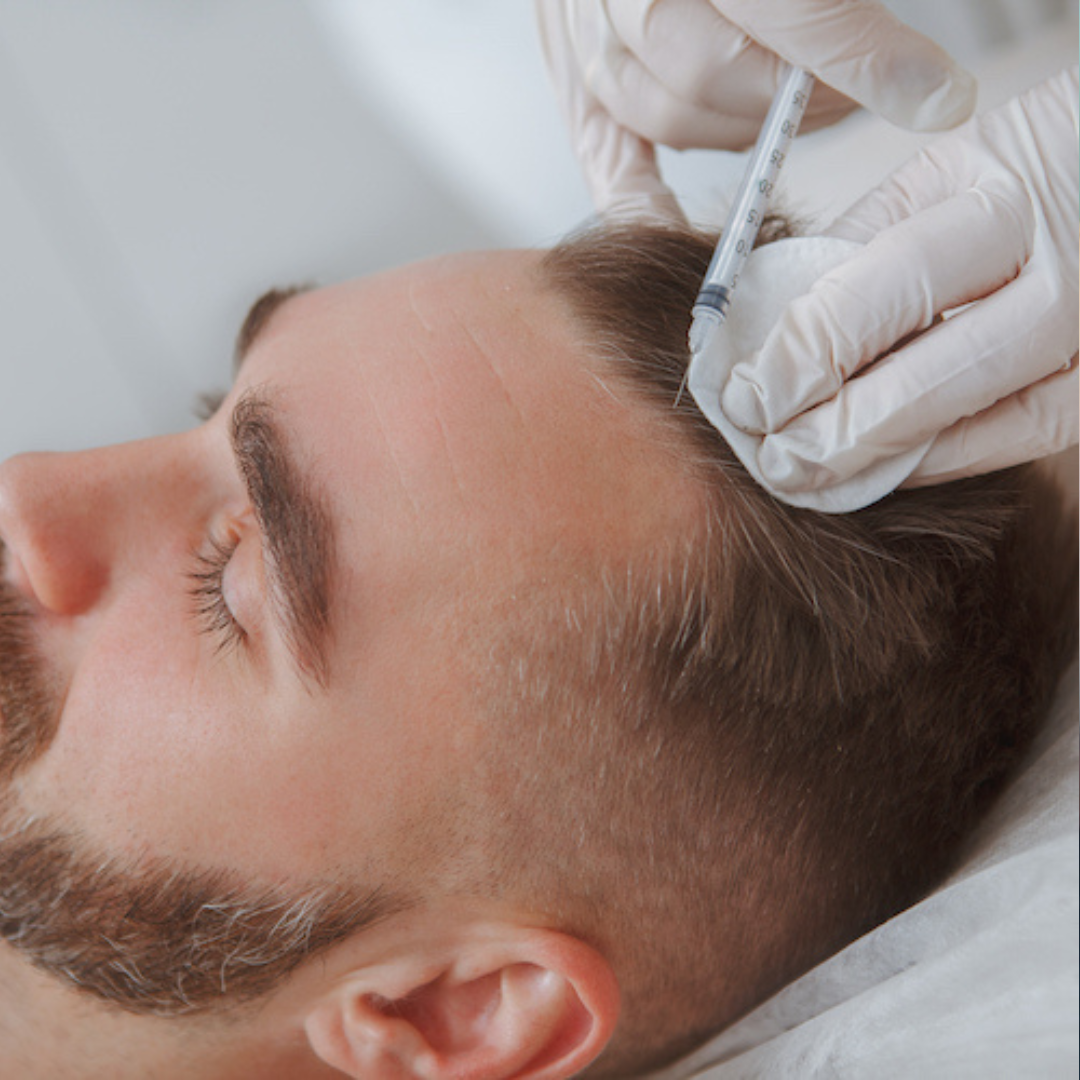
The treatment begins with a simple blood draw. The sample is then processed in a centrifuge to isolate and concentrate the platelets, which are rich in growth factors like PDGF, VEGF, and IGF. This potent plasma is then carefully injected into targeted areas of the scalp where hair thinning or loss has occurred.
PRP works by stimulating the stem cells and other cells around the hair follicles, reactivating growth cycles that have slowed or stopped entirely. It’s a completely autologous procedure — meaning there is no risk of allergic reaction, as the material comes from your own body.
Who Benefits Most
PRP hair therapy is most effective for individuals experiencing early to moderate stages of androgenetic alopecia (pattern baldness), diffuse hair thinning, and reduced hair density. Both men and women have seen outstanding results.
Patients with alopecia areata, postpartum hair loss, stress-induced shedding, or those seeking to complement hair transplant results also find PRP particularly beneficial.
A thorough scalp assessment and trichoscopy analysis will be conducted during your initial consultation to determine whether PRP is the right treatment for your specific hair loss type, pattern, and stage — and to design a personalised protocol for optimal outcomes.
The PRP Process
01
Your dermatologist examines your scalp, reviews your medical history, and discusses your hair loss pattern. Trichoscopy may be used for detailed follicle analysis to confirm candidacy and plan the treatment.
02
A small sample of blood — typically 20–30ml — is drawn from your arm and placed into a centrifuge machine. Within 10 minutes, the platelet-rich plasma is separated and ready for use.
03
The treatment area is cleansed and a topical numbing cream is applied to maximise your comfort. Mild local anaesthesia may also be offered to ensure a virtually pain-free experience.
04
Using ultra-fine needles, the PRP is precisely injected into the subdermal layer of the scalp across the areas of thinning. The procedure is methodical, targeting follicle depth for maximum effectiveness.
05
You’ll receive a detailed aftercare plan. Most patients return to normal activities immediately. Mild redness or sensitivity at injection sites typically resolves within 24–48 hours.
06
For optimal results, a series of 3–6 sessions spaced 4–6 weeks apart is recommended, followed by maintenance treatments every 4–6 months to sustain hair regrowth.
Why Choose PRPThe Advantages of PRP Therapy
Derived entirely from your own blood, PRP carries zero risk of allergic reaction, rejection, or foreign body response. It is the most natural hair restoration available.
Multiple peer-reviewed studies confirm PRP’s effectiveness in improving hair density, diameter, and growth phase activity — especially in androgenetic alopecia.
Unlike surgical hair transplant procedures, PRP requires no incisions, no recovery period, and patients can return to their normal daily routines immediately after treatment.
Beyond stimulating hair growth, PRP enhances scalp microcirculation, reduces inflammation, and improves the overall health of the scalp environment for long-term follicular support.
Each PRP session is tailored to your unique hair loss pattern, scalp condition, and growth goals — ensuring targeted delivery for the areas that need it most.
PRP works synergistically alongside hair transplant surgery, minoxidil therapy, and other dermatological treatments — amplifying results when used as part of a comprehensive hair restoration plan.
Is PRP Right for You?
- Men or women with early to moderate hair thinning or loss
- Individuals diagnosed with androgenetic alopecia (pattern baldness)
- Those experiencing diffuse hair loss or reduced density
- Patients with alopecia areata (spot baldness)
- Postpartum women experiencing hair shedding
- Those with stress-related or nutritional deficiency-based hair loss
- Hair transplant patients looking to enhance graft survival and results
- Individuals seeking a drug-free, surgery-free hair loss solution
- Advanced or complete baldness with no follicular activity may yield limited results
- Active scalp infections or inflammatory skin conditions require treatment first
- Blood disorders or those on anticoagulant therapy may not be suitable candidates
- Pregnant or breastfeeding women should defer treatment
- Patients on certain medications including NSAIDs should disclose full history
- Smokers and those with chronic illness may experience slower response to treatment
When Will You See Results?
Hair growth is a gradual biological process. PRP stimulates dormant follicles over time — patience yields remarkable results.