
Hair Restoration · Ghaziabad & Indirapuram
Hair Transplant in Ghaziabad & Indirapuram
Explore personalised hair restoration options at Renaissance Clinic India, Jaipuria Mall, Indirapuram. Our consultation process helps assess your hair loss pattern, donor area and suitability for techniques such as FUE or FUT.
Renaissance Clinic India
A considered approach to hair restoration
Understand the procedure, donor hair requirements, recovery and realistic expectations before making your decision.
Understand Your Options
Looking for Hair Transplant in Ghaziabad?
Hair thinning and baldness can develop for several reasons, including genetic pattern hair loss, hormonal factors, certain medical conditions and scarring. A hair transplant may be an option for selected people with suitable donor hair.
At Renaissance Clinic India in Indirapuram, the first step is understanding your hair loss pattern and goals. A qualified clinician can discuss whether transplantation, medical treatment or a combination of approaches is appropriate for you.
Why does an assessment matter?
Not everyone experiencing hair loss is ready for a transplant. Donor density, the stability of hair loss, scalp health, medical history and future hair-loss risk all affect treatment planning.
A personalised plan helps set realistic expectations for coverage, hairline design, graft requirements and long-term maintenance.
Hair Restoration Techniques
Hair Transplant Techniques Available
FUE and FUT are different methods of collecting donor follicles. The most suitable technique depends on your scalp, donor area, hair-loss pattern and treatment goals.
FUE Hair Transplant
Follicular Unit Extraction involves collecting individual follicular units from the donor area and placing them in carefully planned recipient sites. Small extraction marks remain, and visible scarring varies between individuals.
FUT Hair Transplant
Follicular Unit Transplantation involves removing a strip of scalp from the donor area and preparing follicular units for transplantation. It usually leaves a linear scar that should be discussed during consultation.
Non-surgical Hair Treatments
Depending on the cause of hair loss, medical treatment or regenerative options such as PRP or GFC may be considered. These treatments are not substitutes for transplantation in every case, and results vary.
Suitability
Who May Be Suitable for a Hair Transplant?
A hair transplant may be considered by people with certain types of permanent hair loss who have sufficient healthy donor follicles. Suitability is established through a clinical assessment rather than hair loss alone.
Treatment planning should also consider whether hair loss is continuing to progress and whether non-surgical treatment could help preserve existing hair.
During your assessment, the clinician may review
- Hair-loss pattern and the areas you want to address
- Donor hair density and scalp condition
- Medical history, medication and relevant health conditions
- Hairline design and realistic coverage expectations
- Whether medical treatment should be considered first
- Likely graft requirements, limitations and possible risks
Your Treatment Journey
What to Expect During a Hair Transplant
The exact process varies by technique and individual treatment plan. Your clinician should explain preparation, procedure details, aftercare and expected milestones before treatment.
Consultation and Scalp Assessment
Discuss your hair-loss history and goals. The clinician examines the donor and recipient areas and reviews whether transplantation is suitable.
Hairline and Graft Planning
If surgery is appropriate, the treatment plan considers the desired hairline, donor supply, graft distribution and long-term hair-loss pattern.
Follicle Collection and Placement
Follicles are collected using the agreed technique and placed in the recipient area. Procedure duration depends on the number of grafts and individual circumstances.
Aftercare and Follow-up
You receive instructions for scalp care, sleeping position, washing, medication and activity restrictions, along with guidance on follow-up appointments.
Recovery and Results
Hair Transplant Recovery Timeline
After a transplant, the scalp may have temporary redness, swelling, tenderness and small scabs. Transplanted hairs commonly shed during the early weeks; this does not necessarily mean the procedure has failed.
New growth often becomes noticeable after a few months. Results continue to develop over time, and the appearance at 9–12 months can provide a more useful assessment of progress. Some people need longer for maturation.
Important aftercare points
- Follow your surgeon's scalp-washing instructions
- Avoid rubbing or scratching the treated areas
- Follow advice on exercise, sun exposure and headwear
- Attend recommended follow-up appointments
- Ask when to restart or continue hair-loss medication
Seek prompt medical advice if you develop increasing pain, spreading redness, fever, unusual discharge or other symptoms that concern you.
Informed Decisions
Hair Transplant Risks and Limitations
Hair transplantation is a surgical procedure and cannot guarantee a particular density, hairline or cosmetic result. Outcomes vary with donor hair quality, healing, technique and individual characteristics.
Potential risks include
- Bleeding, infection or swelling
- Temporary or persistent changes in sensation
- Visible scarring in donor or recipient areas
- Uneven growth, unnatural appearance or poor graft growth
- Shock loss of existing hair in some cases
- Continued thinning of non-transplanted hair
Discuss the benefits, limitations, alternatives and risks with a qualified clinician before deciding on surgery.
Your Consultation
Meet Your Hair Transplant Surgeon
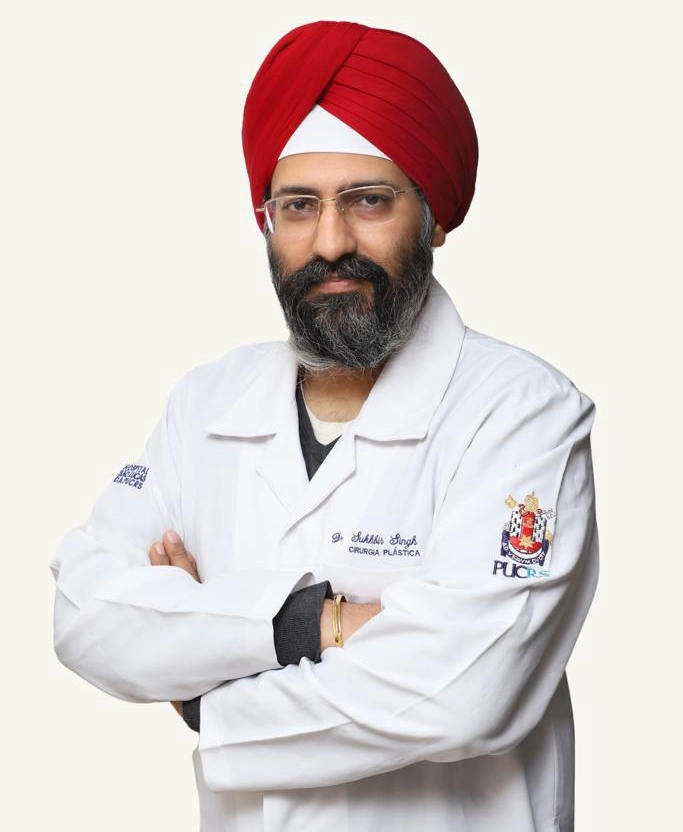
Dr. Sukhbir Singh
Senior Consultant – Plastic & Cosmetic Surgeon
Dr. Sukhbir Singh holds MBBS, MS in General Surgery and DNB in Plastic Surgery, along with fellowship training in cosmetic surgery. He has over 15 years of experience in aesthetic and reconstructive surgery.
A consultation can help you understand the available hair restoration options, suitability, expected recovery and limitations for your individual case.
Treatment Planning
Hair Transplant Cost in Ghaziabad
Hair transplant cost in Ghaziabad and Indirapuram depends on your individual assessment. The number of grafts required is only one factor in the final treatment plan and quote.
What affects the cost?
- Extent and pattern of hair loss
- Number of grafts clinically appropriate
- FUE or FUT technique selected
- Procedure complexity and facility requirements
- Medication, aftercare and follow-up arrangements
Get a personalised estimate
Be cautious about choosing a clinic on price alone. Ask about the proposed technique, who performs the procedure, what the quote includes and what follow-up care is provided.
Common Questions
Hair Transplant FAQs
What is a hair transplant?
A hair transplant is a surgical procedure that moves follicles from a donor area, usually on the scalp, to areas affected by hair loss. Suitability depends on donor hair, the type of hair loss and your overall health.
What is the difference between FUE and FUT hair transplant?
FUE involves extracting individual follicular units, while FUT involves removing a strip of scalp from which follicular units are prepared. Each method has different considerations, including scarring, donor management and recovery.
How much does a hair transplant cost in Ghaziabad?
The cost depends on the number of grafts needed, technique, procedure complexity and aftercare. Renaissance Clinic India can discuss a personalised estimate after a scalp and donor area assessment.
When will I see hair transplant results?
Transplanted hairs often shed in the early weeks. New growth commonly starts after a few months, with more developed results often visible around 9–12 months or later. Results and timelines differ between individuals.
Is a hair transplant permanent?
Transplanted follicles can provide long-lasting growth, but results vary. Hair that was not transplanted may continue to thin over time, so your clinician may discuss ongoing hair-loss management.
Can women have a hair transplant?
Some women may be suitable, depending on the cause and pattern of hair loss and the available donor hair. Diffuse thinning may need a different approach. A clinical assessment is important before deciding on surgery.
Does a hair transplant hurt?
Local anaesthesia is commonly used for the procedure. Temporary discomfort, tightness or tenderness can occur during recovery. Your clinician can explain pain management and what to expect for the chosen technique.
Where can I get a hair transplant in Indirapuram?
Renaissance Clinic India is located at Jaipuria Mall, Indirapuram, Ghaziabad, Uttar Pradesh 201014. Call 93133 99990 to enquire about a hair restoration consultation.
Visit Our Clinic
Hair Transplant Clinic in Indirapuram, Ghaziabad
Renaissance Clinic India
Gate Number 2, LGF, Jaipuria Mall, near Spencer's, Ahinsa Khand 2, Indirapuram, Ghaziabad, Uttar Pradesh 201014.
Phone:
93133 99990
Alternate phone:
0120-4225557
Clinic hours:
Monday–Saturday, 10:00 AM–8:00 PM. Please confirm appointment
availability before visiting.
Convenient for patients enquiring from Indirapuram, Vaishali, Vasundhara, Ahinsa Khand, Shakti Khand, Gyan Khand, Vaibhav Khand, Noida and nearby areas of Delhi NCR.
Explore Hair Treatments
Related Hair Restoration Services
Not every type of hair loss needs surgery. Learn about other treatment options and discuss which approach may suit your needs.
Renaissance Clinic India · Ghaziabad
Considering a Hair Transplant in Ghaziabad or Indirapuram?
Start with an individual assessment to understand your hair-loss pattern, donor hair, treatment options, expected recovery and personalised cost estimate.