
By Renaissance Clinic India • Reviewed by Dr. Ashish Chauhan, Senior Aesthetic Consultant • Updated June 2026
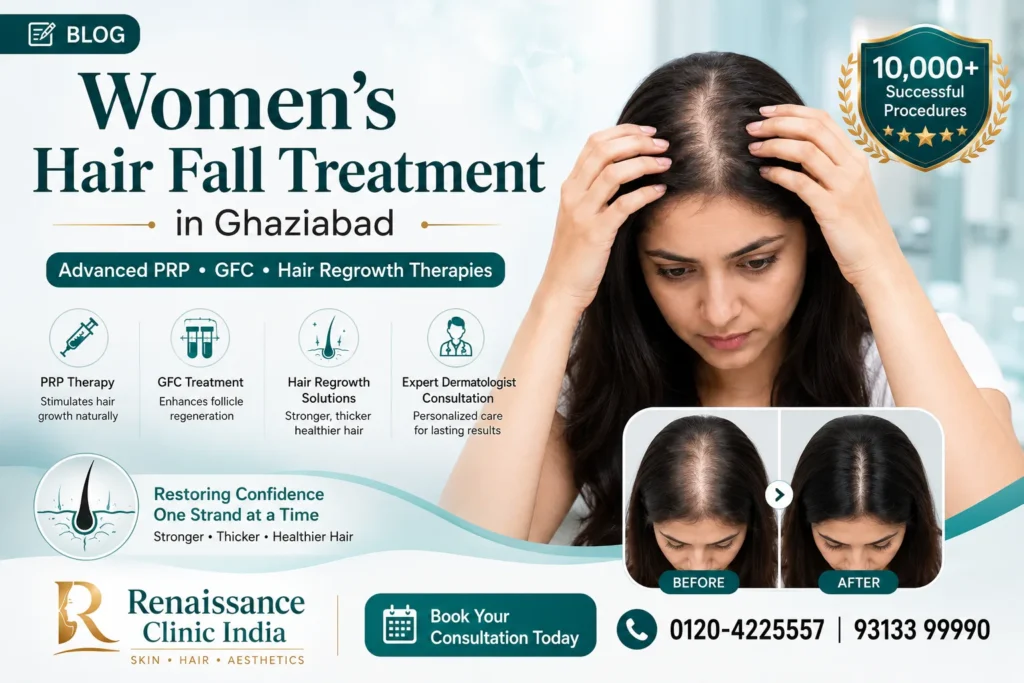
Understanding Hair Fall in Women: It’s More Common Than You Think
Women’s Hair Fall Treatment in Ghaziabad is available at Renaissance Clinic India for women experiencing excessive hair fall, hair thinning, widening part lines, and female pattern hair loss. Our specialists identify the underlying causes of hair loss and create personalized treatment plans that may include PRP therapy, medical treatments, nutritional guidance, and scalp care solutions to help improve hair density and overall hair health.
Recognising this pattern early matters. The sooner the cause is identified, the more treatment options remain on the table, and the better the long-term outcome tends to be.
Common Causes Behind Female Hair Fall
Before recommending any treatment, our specialists at Renaissance Clinic India spend time understanding what’s actually driving the shedding. Here are the most frequent culprits we see in our Ghaziabad and Delhi NCR patients:
1. Hormonal Imbalances
Conditions such as PCOS (Polycystic Ovary Syndrome), thyroid dysfunction, and fluctuating estrogen levels can all disrupt the natural hair growth cycle, pushing more follicles into a resting (and eventually shedding) phase than usual.
2. Postpartum Shedding
Many new mothers notice a sudden increase in shedding three to six months after delivery. This happens because pregnancy hormones temporarily extend the growth phase of hair, and once those levels drop, the hair that was “held back” sheds all at once. In most cases, this resolves on its own within six to twelve months, though supportive care can speed up regrowth.
3. Nutritional Deficiencies
Low iron, vitamin D, B12, zinc, or protein intake can weaken hair from the root. Crash dieting and restrictive eating patterns are common triggers we see in younger patients.
4. Menopause and Perimenopause
As estrogen and progesterone decline during perimenopause and menopause, many women notice their hair becoming visibly thinner, especially around the crown. This is a growing area of concern that often goes undiscussed until it becomes significant.
5. Chronic Stress and Telogen Effluvium
Major life events, illness, surgery, or prolonged stress can trigger a condition called telogen effluvium, where a large number of follicles prematurely enter the shedding phase, usually two to three months after the triggering event.
6. Genetic Factors (Female Pattern Hair Loss)
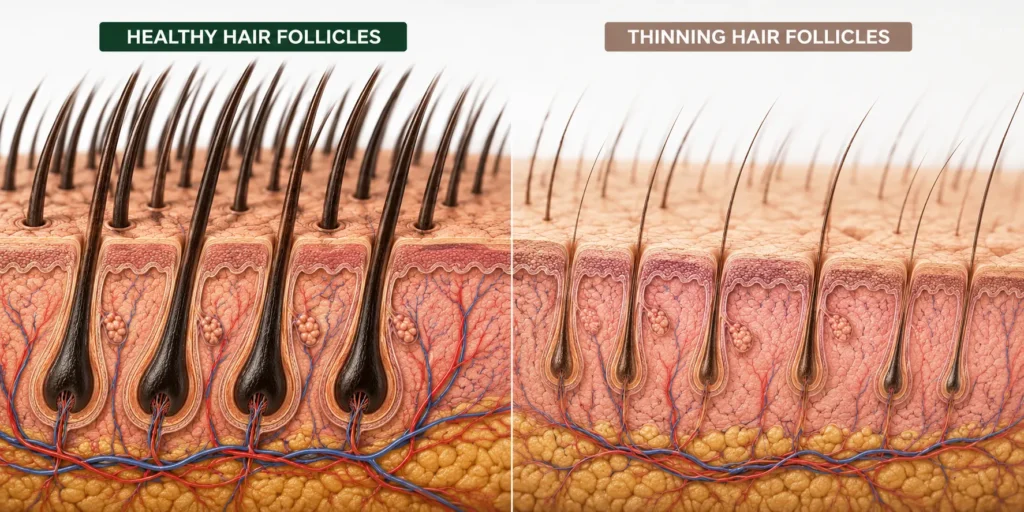
Just like men, women can inherit a genetic sensitivity to hormones that gradually shrinks hair follicles over time. This type tends to be progressive and usually needs a structured, long-term treatment approach.
7. Over-Styling and Harsh Hair Practices
Tight hairstyles, frequent heat styling, chemical treatments, and harsh brushing can cause traction alopecia and breakage that mimics — or worsens — other forms of hair fall.
When Should You See a Specialist?
A small amount of daily shedding is completely normal — most people lose anywhere between 50 and 100 strands a day. It’s time to book a consultation if you notice:
- Widening of your centre parting over a few months
- Visible thinning at the crown when hair is pulled back
- Clumps of hair coming out during washing or brushing
- Bald or thinning patches anywhere on the scalp
- Hair fall accompanied by fatigue, irregular periods, or weight changes
If any of these sound familiar, getting an accurate diagnosis early gives you far more treatment options than waiting it out.
Proven Women’s Hair Fall Treatment Options in Ghaziabad
There is no single “best” treatment for everyone. What works depends entirely on the underlying cause, the stage of hair loss, and your personal goals. Below are the core options our doctors in Ghaziabad typically recommend, often combined for a stronger, longer-lasting result.
PRP (Platelet-Rich Plasma) Therapy
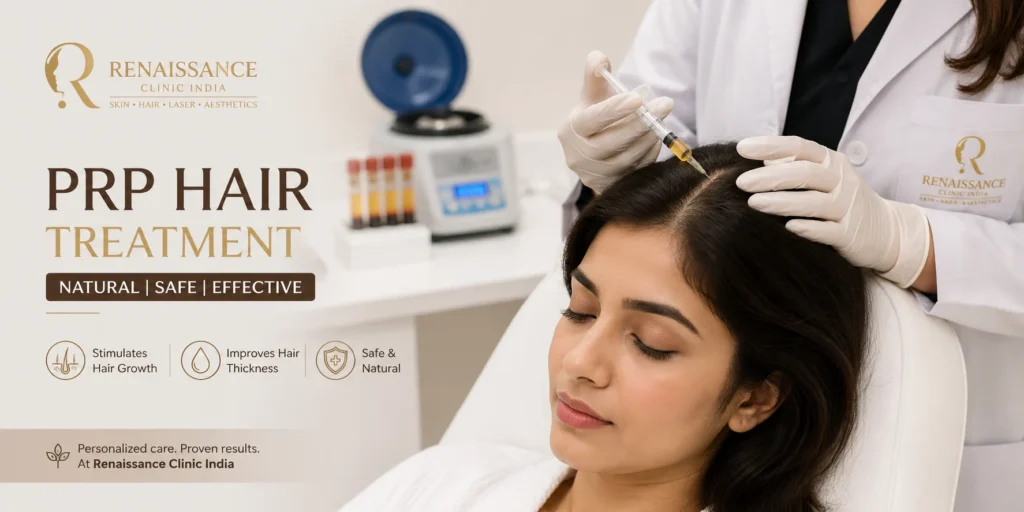
PRP involves drawing a small sample of your own blood, processing it to concentrate the growth-factor-rich platelets, and injecting that plasma directly into the scalp. It’s one of the most requested non-surgical options for women because it works with your body’s own healing mechanisms to stimulate dormant follicles and improve hair density over a series of sessions.
Medical and Topical Therapy
For many women, a tailored combination of topical solutions, oral supplements, and nutrient correction (especially for iron, vitamin D, and B12 deficiencies) is enough to slow shedding and encourage regrowth. This is usually the first line of treatment when bloodwork reveals a clear deficiency or hormonal cause.
Mesotherapy and Microneedling
Fine, controlled micro-injuries to the scalp combined with nutrient-rich serums can boost blood circulation to the follicles and improve absorption of active ingredients, supporting thicker, healthier regrowth over time.
Female Hair Transplant (FUE)
For women with more advanced thinning, especially along the frontal hairline or where bald patches have formed, a Follicular Unit Extraction (FUE) transplant can restore density using your own donor hair. The technique for women is more delicate than for men, since the goal is to preserve natural density across the scalp rather than create a new hairline — our surgeons plan each case individually with this in mind.
Lifestyle and Nutritional Correction
Alongside clinical treatment, our team often works with patients on practical, sustainable changes — improving protein and iron intake, managing stress, and easing off harsh styling habits — because long-term results depend on more than just the procedure itself.
Why Women Across Delhi NCR Choose Renaissance Clinic India
Renaissance Clinic India is located in Indirapuram, Ghaziabad, and has become a trusted name for patients travelling from Noida, Vaishali, Vasundhara, and across East Delhi. A few things set our approach apart:
- Detailed consultation and diagnosis before any treatment is recommended — we look at hormones, nutrition, and scalp condition, not just symptoms
- Experienced specialists, including Dr. Sukhbir Singh, a Senior Consultant with over 15 years in hair transplant and cosmetic procedures
- Modern, hygienic facilities designed specifically for hair and aesthetic treatments
- Personalised treatment plans rather than generic protocols
- A strong track record, reflected in thousands of patient reviews across our services
Our philosophy is simple: treatment should be built around your specific cause of hair fall, not a generic package. That’s why every patient starts with a proper diagnostic consultation rather than being handed a standard prescription.
What to Expect During Your First Visit
If you’re nervous about walking into a clinic for the first time, here’s what the process typically looks like:
- A detailed discussion about your hair fall history, diet, stress levels, and any hormonal symptoms
- A physical scalp examination, sometimes supported by trichoscopy to assess follicle health
- Recommended bloodwork if a hormonal or nutritional cause is suspected
- A personalised treatment plan with realistic timelines and expected outcomes
- Clear pricing with no pressure to commit on the first visit
Most women leave their first consultation with far more clarity than they expected — simply understanding the actual cause behind the shedding often brings a lot of relief on its own.
Common Myths About Hair Fall in Women — Busted
Misinformation often delays women from seeking proper care. Before you try another home remedy you saw online, here are a few myths worth clearing up.
Myth: Hair fall in women always means baldness is coming
Truth: Most women experience diffuse thinning rather than complete baldness. With timely care, many patients see meaningful improvement in density rather than continued progression.
Myth: Oiling alone can reverse hormonal or genetic hair loss
Truth: Oiling supports scalp health and can feel soothing, but it cannot correct an underlying hormonal imbalance or reverse genetically driven thinning. It works best as a supportive habit alongside, not instead of, clinical care.
Myth: Hair fall treatment is only for older women
Truth: We regularly see patients in their twenties dealing with PCOS-related shedding, postpartum loss, or stress-induced thinning. Age is rarely the deciding factor — the underlying cause is.
Myth: Once you start treatment, you can never stop
Truth: This depends entirely on the cause. Deficiency-related or postpartum hair fall often resolves once corrected, while genetic thinning may need ongoing maintenance, similar to managing any other long-term health condition.
How to Choose the Right Clinic for Women’s Hair Fall Treatment in Ghaziabad
Not every clinic offering hair treatments is equipped to handle the specific needs of female patients. Here’s what we’d encourage you to look for, whether you choose Renaissance Clinic India or anywhere else:
- A doctor-led consultation, not a sales-led one — diagnosis should always come before a treatment is sold
- Willingness to investigate hormonal and nutritional causes, not just offer a generic PRP package
- Experience specifically with female pattern hair loss, which differs from male pattern baldness in both presentation and treatment
- Transparent pricing and realistic timelines, rather than promises of overnight results
- A clean, well-equipped facility with proper hygiene protocols for injectable and procedural treatments
At our Indirapuram location, every new patient goes through this exact diagnostic process before any treatment plan is finalised — because effective hair fall treatment starts with an accurate, individual diagnosis, not a standard protocol applied to everyone who walks in.
Frequently Asked Questions About Women’s Hair Fall Treatment
Is hair fall in women reversible?
In many cases, yes. Hair fall caused by nutritional deficiencies, postpartum changes, or temporary stress is often reversible with the right treatment and time. Genetic or hormonal hair loss can usually be slowed and improved significantly, even if it can’t always be fully reversed.
How long does it take to see results from PRP therapy?
Most patients begin noticing reduced shedding and improved hair texture within 8 to 12 weeks, with fuller results typically visible after a complete course of sessions, as recommended by your treating doctor.
Can a hair transplant work for women?
Yes. Female hair transplants are increasingly common for women with stable donor areas and well-defined thinning patterns. A consultation will confirm whether you’re a suitable candidate.
Do I need blood tests before starting treatment?
Often, yes. Since hormonal and nutritional causes are so common in women, basic bloodwork (thyroid, iron, vitamin D, B12) helps our doctors recommend the most effective, targeted treatment instead of guessing.
Is treatment painful?
Most non-surgical treatments like PRP and mesotherapy involve only mild, brief discomfort, and numbing options are available. Our team prioritises patient comfort throughout every procedure.
Take the First Step Toward Fuller, Healthier Hair
Hair fall can feel overwhelming when you’re dealing with it alone, but you don’t have to figure it out by trial and error. With the right diagnosis and a treatment plan built around your specific cause, visible improvement is realistic and achievable for most women.
If you’re based in Ghaziabad, Indirapuram, Noida, Vaishali, Vasundhara, or anywhere across Delhi NCR and you’re ready for real answers, our team at Renaissance Clinic India is here to help. Book a consultation today and take the first step toward understanding — and treating — your hair fall.
www.renaissanceclinicindia.com
📞 Call: +91 93133 99990 | 0120-4225557
📍 Visit: Gate No. 2, LGF, Jaipuria Mall, Ahinsa Khand 2, Indirapuram, Ghaziabad, Uttar Pradesh 201014
External References
For readers who want to explore the clinical background further, the American Academy of Dermatology and the National Institutes of Health both publish accessible, peer-reviewed information on female pattern hair loss and its management.