
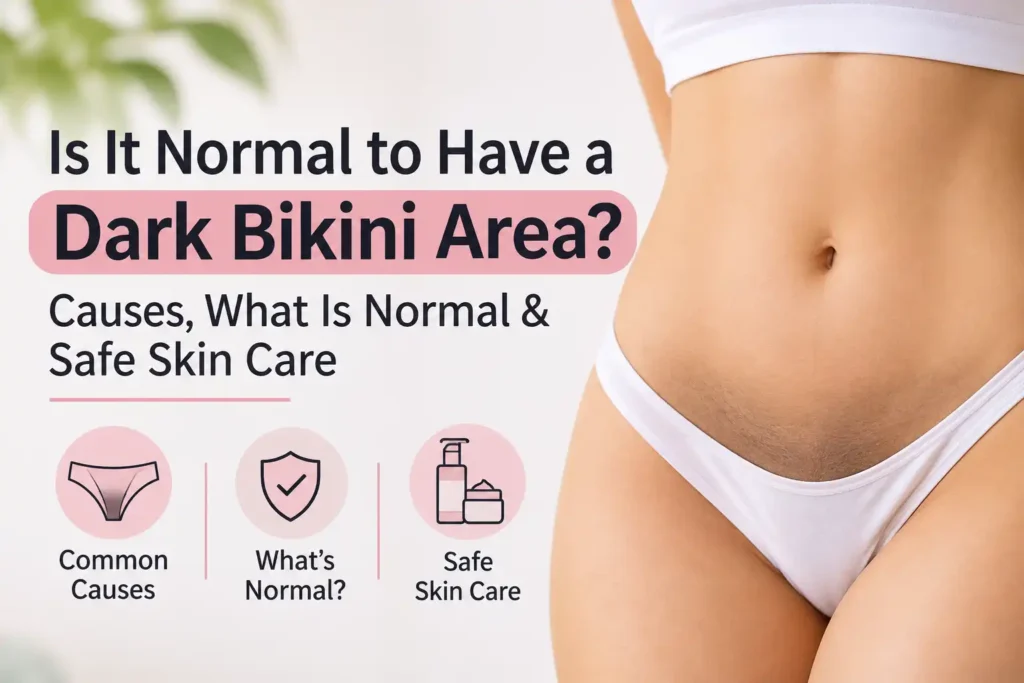
Have you noticed that your bikini area is darker than the skin on your stomach, thighs or other parts of your body? You may have wondered whether this is normal, whether it is caused by shaving, or whether it indicates an underlying skin problem.
The good news is that having a darker bikini area is very common and is usually a normal variation in skin pigmentation. The skin around the groin, inner thighs and external genital area can naturally be darker because of genetics, hormones, friction and repeated irritation.
However, not every type of darkening has the same cause. Sometimes, pigmentation develops after shaving, waxing or inflammation. In other cases, thick, velvety dark skin may be associated with conditions such as acanthosis nigricans.
At Renaissance Clinic India, we believe that understanding your skin is the first step towards caring for it safely. This guide explains what is normal, why intimate skin becomes darker, when you should seek medical advice and what treatment options may help.
Quick Answer: Is It Normal to Have a Dark Bikini Area?
Yes. It is normal for the bikini area to be darker than the surrounding skin. The groin, bikini line, inner thighs and external genital skin can naturally have more pigmentation than other body areas.
This happens because of natural melanin distribution, genetics, hormonal changes and repeated friction. Shaving, waxing and irritation can also contribute to additional darkening.
A darker bikini area does not automatically indicate poor hygiene, infection or an underlying disease. However, sudden darkening, itching, pain, unusual rashes or thick, velvety skin should be assessed by a qualified healthcare professional.
Why Is the Bikini Area Naturally Darker Than the Rest of the Body?
The colour of your skin is largely influenced by melanin, a natural pigment produced by cells called melanocytes.
Different body areas naturally contain different amounts of pigmentation. Skin folds and intimate areas can appear darker because of several overlapping factors.
Some common explanations include:
Natural pigmentation: Genetics and individual skin tone influence the colour of intimate areas.
Hormonal activity: Hormonal changes during puberty, pregnancy and other life stages may influence pigmentation.
Skin friction: Repeated rubbing between the thighs or against clothing can cause irritation and post-inflammatory pigmentation.
Hair removal: Frequent shaving and waxing may cause small amounts of inflammation that leave dark marks.
Skin sensitivity: Irritation from fragranced products, depilatory creams and harsh cleansers may contribute to uneven skin tone.
It is important to understand that naturally darker intimate skin does not need treatment unless you personally want to explore cosmetic options.
7 Reasons Your Bikini Area May Be Darker
1. Natural Skin Tone and Genetics
One of the most common reasons for a darker bikini area is simply your natural skin pigmentation.
If your skin naturally produces more melanin, certain areas, including the groin, underarms and inner thighs, may appear darker than your arms or abdomen.
This is not a sign of poor hygiene or unhealthy skin.
2. Hormonal Changes
Hormones can influence melanin production and pigmentation.
Some women notice changes in intimate skin pigmentation during:
Puberty
Pregnancy
Post-pregnancy hormonal changes
Certain hormonal conditions
Menopause
Hormonal pigmentation does not necessarily indicate a medical problem. However, if darkening develops alongside irregular periods, acne, excessive hair growth or other symptoms, a medical evaluation may be helpful.
3. Friction From Tight Clothing
Repeated friction is another common contributor to bikini line pigmentation.
Wearing tight jeans, synthetic underwear or restrictive leggings for extended periods may cause repeated rubbing around the groin and inner thighs.
Over time, irritation and inflammation can stimulate additional melanin production, leading to darker patches.
What can help?
Choose breathable underwear, avoid excessively tight clothing and keep skin folds dry without rubbing or scrubbing aggressively.
4. Frequent Shaving and Waxing
Shaving and waxing can sometimes irritate sensitive bikini-area skin.
Small cuts, razor bumps, ingrown hairs and inflammation may trigger a condition called post-inflammatory hyperpigmentation (PIH).
This means the skin produces extra pigment after inflammation or injury.
If you regularly experience razor bumps or irritation, consider discussing gentler hair-removal alternatives with a qualified professional.
5. Sweat and Moisture-Related Irritation
The groin is a natural skin-fold area where heat, moisture and friction can accumulate.
Excessive sweating, prolonged damp clothing and rubbing may contribute to irritation. Repeated inflammation can leave the skin looking darker.
However, sweat itself does not automatically cause pigmentation, and darkening should not be assumed to be an infection.
6. Acanthosis Nigricans
Sometimes, darker skin around the groin may be related to a condition called acanthosis nigricans.
It commonly appears as darker, thicker and sometimes velvety-looking skin in body folds, including the neck, armpits and groin.
It may be associated with insulin resistance, obesity, type 2 diabetes or certain hormonal conditions.
If you notice thick, velvety dark patches, particularly alongside similar changes on your neck or underarms, consult a healthcare professional.
The underlying cause may need investigation rather than simply treating the pigmentation.
7. Irritation From Intimate Hygiene Products
Fragranced soaps, harsh cleansers, depilatory creams and aggressive exfoliating products can irritate sensitive external skin.
Repeated irritation may cause inflammation followed by pigmentation.
Using more products does not necessarily produce better results. Gentle cleansing and avoiding unnecessary chemical treatments are generally safer approaches.
Is Dark Bikini Area Skin Normal or a Sign of a Problem?
Not all pigmentation requires medical treatment. The important thing is to understand whether the skin colour is naturally darker or whether there are other changes.
| Skin appearance | What it may indicate |
|---|---|
| Even, naturally darker skin | Normal pigmentation |
| Darkening after shaving or waxing | Post-inflammatory pigmentation |
| Dark patches with repeated friction | Friction-related pigmentation |
| Thick, velvety dark skin | Possible acanthosis nigricans |
| Darkening with itching or a rash | Possible irritation or skin condition |
| Sudden, rapidly spreading pigmentation | Needs medical assessment |
Remember that appearance alone cannot confirm a diagnosis.
When Should You Be Concerned About a Dark Bikini Area?
Most naturally darker bikini areas are harmless. However, certain changes should not be ignored.
Consider consulting a doctor if you notice:
Sudden or rapidly increasing pigmentation.
Thick, velvety skin developing around the groin.
Persistent itching, burning or irritation.
Painful bumps, sores or unusual skin lesions.
A rash, scaling, swelling or unusual discharge.
Dark patches appearing in several skin folds at the same time.
A healthcare professional can examine the affected skin and determine whether the pigmentation is cosmetic, inflammatory or associated with another condition.
If there is a possibility of an underlying hormonal or metabolic problem, appropriate investigations may be recommended.
Can a Dark Bikini Area Become Lighter Naturally?
It depends on the cause.
If the darkening is related to repeated irritation, friction or shaving, reducing those triggers may gradually improve the appearance of the skin.
However, natural pigmentation caused by genetics or hormones may not disappear completely.
Some helpful habits include:
1. Wear breathable clothing
Choose comfortable underwear and avoid clothing that causes continuous friction.
2. Avoid aggressive scrubbing
Scrubbing can damage the skin barrier and make pigmentation worse.
3. Use gentle cleansing products
Avoid fragranced soaps, harsh cleansers and irritating products around sensitive intimate skin.
4. Be careful with hair removal
Use a suitable hair-removal method and avoid shaving repeatedly over irritated skin.
5. Keep the area comfortably dry
Change out of sweaty clothing and gently pat the area dry after bathing.
6. Avoid unverified home remedies
Lemon juice, baking soda, toothpaste and household bleaching products can irritate sensitive skin and potentially worsen pigmentation.
7. Seek professional advice
If pigmentation persists or you are unsure about its cause, a skin assessment can help identify suitable options.
How Can You Treat a Dark Bikini Area Safely?
If the pigmentation is bothering you, professional treatment may help improve uneven skin tone.
The right approach depends on the type of pigmentation, skin sensitivity, medical history and underlying cause.
At a clinical level, possible options include:
1. Medical-Grade Skin Brightening Peels
Certain professionally selected chemical peels may help improve superficial pigmentation by encouraging controlled skin exfoliation and renewal.
The peel and its strength must be chosen carefully because intimate skin is sensitive and excessive irritation can worsen pigmentation.
2. Targeted Laser-Based Treatments
Selected laser-based procedures may be considered for certain pigmentation concerns.
However, not every dark bikini area is suitable for laser treatment. The device, settings, skin type and cause of pigmentation must be evaluated first.
3. Prescription-Based Topical Treatments
A doctor may recommend specific topical ingredients depending on the diagnosis.
Not every skin-lightening ingredient is safe for intimate skin, and prescription products should never be used without medical guidance.
4. Treating the Underlying Cause
If pigmentation is associated with insulin resistance, hormonal changes, inflammation or another medical condition, addressing the underlying issue is important.
Treating only the visible colour may not solve the problem.
Want to understand your treatment options?
Explore our Bikini Area Pigmentation Treatment in Ghaziabad page to learn about professional skin assessment, medical-grade brightening peels and other suitable treatment approaches at Renaissance Clinic India.
What Happens During a Bikini Area Pigmentation Consultation?
A professional consultation should focus on identifying the reason for pigmentation before recommending a treatment.
At Renaissance Clinic India, the treatment journey is designed around individual skin concerns.
Step 1: Understanding Your Concern
The doctor discusses when the darkening started, whether it is changing and whether you have experienced irritation, shaving-related bumps or other symptoms.
Step 2: Skin Assessment
The affected area, pigmentation pattern, skin type and sensitivity are assessed.
Step 3: Personalised Treatment Plan
Depending on the findings, suitable options may include medical-grade peels, selected laser-based procedures or prescription skincare.
Step 4: Aftercare Guidance
You receive instructions to minimise irritation and reduce factors that may contribute to recurring pigmentation.
Step 5: Follow-Up
Progress is reviewed and the treatment plan can be adjusted according to your skin’s response.
Why Choose Renaissance Clinic India for Bikini Area Pigmentation Treatment?
Choosing care for an intimate skin concern is a personal decision. Privacy, professional assessment and realistic treatment advice are important.
Renaissance Clinic India provides doctor-led aesthetic consultations for patients from Indirapuram, Ghaziabad and surrounding Delhi NCR areas.
Our approach focuses on:
Individual skin assessment before treatment.
Treatment options selected according to skin type and sensitivity.
Privacy and respectful consultation.
Guidance on preventing irritation and recurring pigmentation.
Realistic expectations about improvement and treatment duration.
You can also learn more about Dr. Ashish Chauhan, Founder and Director of Renaissance Clinic India and Senior Aesthetic Consultant.
For more information about the clinic and its skin and aesthetic services, visit Renaissance Clinic India.
Frequently Asked Questions About a Dark Bikini Area
1. Is it normal for a woman’s bikini area to be darker than her body?
Yes. The bikini area, groin and external genital skin can naturally be darker than other parts of the body. Genetics, melanin distribution, hormones and friction can all influence skin colour.
2. Does a dark bikini area mean poor hygiene?
No. Dark pigmentation is not an indication of poor hygiene. It is usually associated with natural pigmentation, hormonal influences or repeated skin irritation.
3. Why is my private area darker even though I maintain good hygiene?
Skin pigmentation is influenced by genetics, hormones and melanin production, not just hygiene. Frequent washing or aggressive scrubbing will not necessarily lighten the area and may cause irritation.
4. Is dark skin around the groin normal?
Yes, mild and stable darkening around the groin is common. However, thick, velvety patches, sudden changes, itching or rashes should be assessed by a healthcare professional.
5. Can shaving make the bikini area darker?
Yes. Repeated shaving may cause irritation, razor bumps and ingrown hairs. Inflammation can lead to post-inflammatory hyperpigmentation, making the skin appear darker.
6. Does pregnancy cause bikini area darkening?
Hormonal changes during pregnancy can influence pigmentation in different body areas, including intimate skin. The degree of change varies from person to person.
7. Can a dark bikini area go away on its own?
Some pigmentation may gradually improve when its triggers, such as friction and irritation, are reduced. Naturally darker skin or pigmentation related to hormonal and other medical factors may persist.
8. Is it safe to use skin-lightening creams on the bikini area?
Not all brightening creams are suitable for intimate skin. Some ingredients can cause irritation, inflammation and further pigmentation. Consult a qualified doctor before using prescription or strong skin-lightening products.
9. How can I lighten my bikini area without damaging my skin?
Start by avoiding friction, harsh cleansers, aggressive exfoliation and unverified home remedies. If pigmentation persists, seek a professional assessment before choosing a treatment.
10. When should I get treatment for bikini area pigmentation?
Consider a consultation if pigmentation is persistent, bothers you cosmetically or develops alongside other skin changes. Sudden darkening, thickening, pain, itching or rashes should be medically assessed rather than treated as a purely cosmetic issue.
11. Is bikini area pigmentation treatment available in Ghaziabad?
Yes. Renaissance Clinic India in Indirapuram, Ghaziabad offers consultations for bikini area pigmentation. Depending on the cause and skin assessment, treatment options may include medical-grade brightening peels, selected laser-based procedures and prescription skincare.
12. Does every dark bikini area need treatment?
No. Naturally darker intimate skin is common and does not need to be lightened for medical reasons. Treatment is a personal choice when pigmentation is suitable for cosmetic care.
Final Thoughts: A Dark Bikini Area Is Often Completely Normal
Having a darker bikini area is common, and in most cases, it is simply a natural variation in skin pigmentation.
Genetics, hormones, friction, shaving and skin irritation can all contribute to changes in intimate skin colour.
The most important thing is not to compare your skin with unrealistic beauty standards or use harsh products in an attempt to lighten it.
If you notice unusual changes or want to understand professional treatment options, a qualified skin professional can help you make an informed decision.
For a private consultation about bikini area pigmentation, contact Renaissance Clinic India, Indirapuram, Ghaziabad.
Call: 93133 99990 | 0120-4225557
Address: Gate No. 2, LGF, Jaipuria Mall, Ahinsa Khand 2, Indirapuram, Ghaziabad, Uttar Pradesh 201014.
Medical disclaimer: This article is for educational purposes only and does not replace an in-person medical examination or individual medical advice.