
Dark patches, sun spots, and stubborn melasma can quietly chip away at your confidence — no matter how good your skincare routine looks on paper. If you’ve been searching for pigmentation treatment in Ghaziabad that actually delivers visible, lasting results, you’re in the right place. This guide walks you through everything you need to know: what causes pigmentation, the treatment options available today, and how to choose the right clinic for your skin.
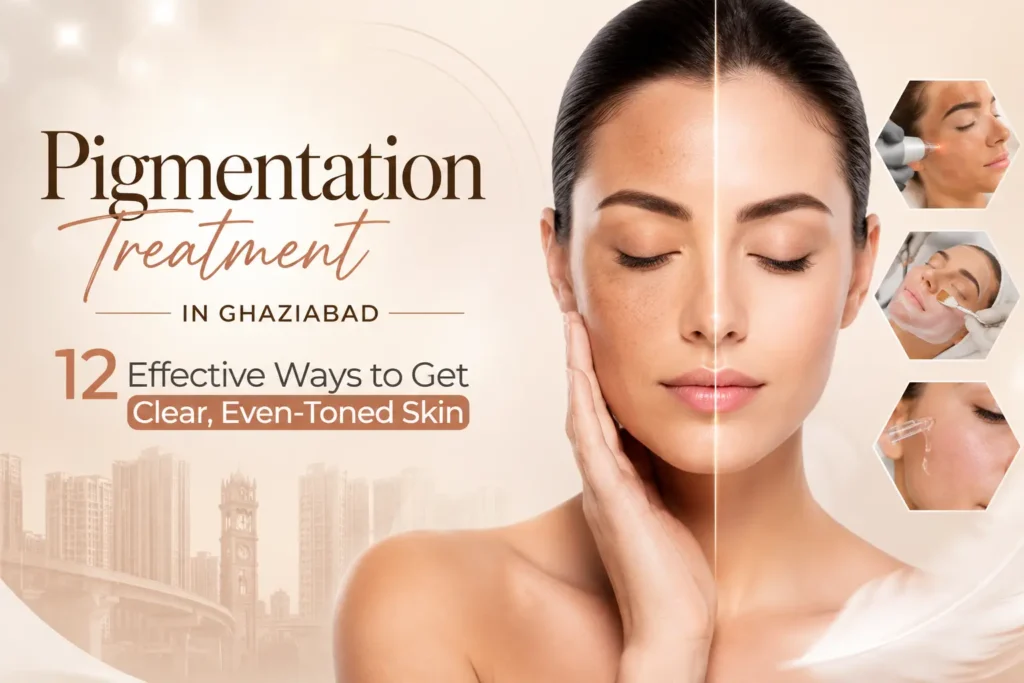
1. What Is Skin Pigmentation?
Skin pigmentation refers to the coloring of your skin, which is determined by melanin — the pigment produced by cells called melanocytes. When melanocytes function normally, skin tone stays fairly even. But when they overproduce or underproduce melanin, you end up with patches that are darker (hyperpigmentation) or lighter (hypopigmentation) than the surrounding skin.
Most people seeking skin pigmentation treatment are dealing with hyperpigmentation — dark spots, patches, or discoloration that make the complexion look uneven, dull, or aged. It’s one of the most common dermatological concerns worldwide, and it’s especially prevalent among Indian skin types, which tend to have higher baseline melanocyte activity.
Pigmentation isn’t just a cosmetic nuisance. For many people, it affects how confident they feel in photos, at work, and in everyday social situations — which is exactly why targeted, professional treatment matters.
2. Causes of Pigmentation
Understanding what triggers pigmentation helps you treat it more effectively and prevent it from coming back. Common causes include:
- Sun exposure (UV damage): The single biggest trigger. UV rays stimulate melanin production as a protective response, leading to sunspots and worsening existing pigmentation.
- Hormonal changes: Pregnancy, contraceptive pills, and thyroid disorders can trigger melasma, often called the “mask of pregnancy.”
- Post-inflammatory hyperpigmentation (PIH): Dark marks left behind after acne, eczema, insect bites, or skin injury.
- Genetics: A family history of melasma or pigmentation disorders increases your likelihood of developing them.
- Heat exposure: Beyond UV rays, thermal heat from cooking, saunas, or hot climates can also trigger melanin production.
- Certain medications: Some antibiotics, anti-seizure drugs, and chemotherapy agents can cause drug-induced pigmentation.
- Skin trauma or aggressive treatments: Waxing, threading, or harsh exfoliation can cause friction-related pigmentation over time.
Because pigmentation is multi-causal, effective treatment usually needs a multi-modal approach rather than a single quick fix.
3. Types of Pigmentation
Not all pigmentation is the same, and identifying the type is the first step toward the right treatment plan.
- Melasma: Symmetrical brown or grey-brown patches, usually on the cheeks, forehead, upper lip, and chin. Strongly linked to hormones and sun exposure, and more common in women.
- Post-Inflammatory Hyperpigmentation (PIH): Dark marks that appear after acne, injury, or inflammation heals.
- Sun Spots (Solar Lentigines): Small, flat, darker spots caused by cumulative UV exposure, often appearing on the face, hands, and shoulders.
- Freckles (Ephelides): Small, genetically determined spots that darken with sun exposure.
- Age Spots: Similar to sun spots but associated with skin aging and long-term UV exposure.
- Periorbital Hyperpigmentation: Dark circles around the eyes, often a mix of pigmentation, thin skin, and vascular factors.
Pigmentation can also be classified by depth — epidermal (surface-level, responds faster to treatment), dermal (deeper, more stubborn), or mixed. This distinction plays a major role in deciding between chemical peels, laser therapy, or a combination approach.
4. Treatment Options for Hyperpigmentation Treatment
Modern dermatology offers several effective routes for treating pigmentation, and most reputable clinics combine more than one for best results:
- Chemical Peels: Glycolic, kojic, TCA, and lactic acid peels accelerate cell turnover, exfoliate pigmented surface cells, and reveal fresher skin underneath.
- Q-Switched Nd:YAG Laser Therapy: Delivers focused energy that breaks down melanin deposits into microscopic particles, which the body then clears away naturally. This is considered one of the gold-standard options for stubborn or deep pigmentation.
- Mesotherapy: Microinjections of tranexamic acid, glutathione, vitamin C, and kojic acid delivered directly into the dermis for targeted brightening, particularly useful for deep melasma.
- Topical Depigmenting Agents: Prescription-strength serums containing ingredients like hydroquinone alternatives, niacinamide, retinoids, and vitamin C, used to prime skin before procedures and maintain results afterward.
- Microneedling / RF Microneedling: Helps improve product absorption and stimulate collagen, often used alongside brightening actives for post-acne marks.
- Sun Protection (SPF): Not a treatment on its own, but non-negotiable for every pigmentation protocol — without consistent SPF, other treatments simply won’t hold.
The right combination depends on your pigmentation type, its depth, your skin type, and how your skin has responded to treatments in the past.
5. Chemical Peels vs Laser: Which Is Better?
This is one of the most common questions patients ask, and the honest answer is: it depends on your pigmentation.
Chemical peels work primarily on the epidermis (surface layer). They’re excellent for superficial pigmentation, dullness, and mild PIH, and they come with the added benefit of smoother texture and a natural glow. Peels are generally more affordable per session but often need to be repeated regularly.
Laser toning (Q-switched Nd:YAG) penetrates deeper, making it more effective for dermal or mixed pigmentation like stubborn melasma. It works with minimal downtime and can target melanin more precisely than peels alone.
In practice, the best results usually come from combining both — using peels to refresh the surface while laser addresses deeper pigment, supported by mesotherapy and a strict home-care regimen. This is why a proper diagnosis before starting treatment matters more than picking one method based on trends or guesswork.
6. Who Is a Good Candidate for Pigmentation Treatment?
Pigmentation treatment is generally suitable for:
- Individuals with melasma, chloasma, or hormonal pigmentation
- Anyone dealing with sun damage, age spots, or freckles
- Patients with post-acne dark marks (PIH)
- People with uneven, dull, or patchy skin tone
- Those with pigmentation from past injury, rash, or inflammation
- Anyone who hasn’t seen results from over-the-counter creams alone
A few considerations to keep in mind:
- Active acne, infections, or open wounds should be treated before starting pigmentation therapy
- Pregnant or breastfeeding patients should defer certain treatments
- Strict sun protection between sessions is essential for safety and results
- Patients on blood thinners or photosensitizing medications need careful evaluation
- Isotretinoin use in the past 6 months may require a treatment pause
- Pigmentation can temporarily look slightly darker before it improves — this is a normal part of the process
A proper consultation with a qualified dermatologist helps rule out any contraindications and ensures the treatment plan is tailored, not templated.
7. How Many Sessions Are Needed?
This varies from person to person, but as a general guide:
- Superficial pigmentation (sun spots, mild PIH): Often shows visible improvement within 3–4 sessions
- Melasma and deeper pigmentation: Typically needs 5 or more sessions, sometimes spaced across several months, with maintenance sessions afterward
- Combination protocols (peel + laser + mesotherapy): Usually planned across 3–6 months for full results
Melasma, in particular, tends to be a chronic, recurring condition rather than a one-time fix — which is why ongoing maintenance and SPF discipline matter as much as the initial treatment sessions.
8. Aftercare Tips for Pigmentation Treatment
Aftercare can make or break your results. Here’s what dermatologists typically recommend:
- Apply broad-spectrum SPF 50+ PA++++ daily, reapplying every 2–3 hours if you’re outdoors — this is the single most important step
- Avoid direct sun exposure, especially in the first 48–72 hours after a peel or laser session
- Skip makeup for 24–48 hours post-peel to let skin heal properly
- Stick to a gentle, fragrance-free cleanser and avoid active ingredients (retinol, AHAs/BHAs) unless prescribed
- Keep skin well-moisturized to support the healing barrier
- Avoid picking or peeling flaking skin manually — let it shed naturally
- Follow your prescribed home-care regimen (brightening serums, retinoids, niacinamide) consistently, not just occasionally
Consistency here is what separates temporary improvement from long-term, even-toned results.
9. Prevention Tips to Avoid Pigmentation Recurrence
Because pigmentation — especially melasma — has a tendency to return, prevention is just as important as treatment:
- Make sunscreen a non-negotiable daily habit, rain or shine, indoors or outdoors
- Wear a wide-brimmed hat and seek shade during peak UV hours (typically 11 AM–4 PM)
- Manage hormonal triggers where possible, and discuss pigmentation-prone contraceptive options with your doctor
- Treat acne and inflammation promptly to reduce the risk of post-inflammatory marks
- Avoid aggressive scrubbing, waxing, or threading in areas prone to pigmentation
- Stay consistent with antioxidant-rich skincare (vitamin C, niacinamide) to support skin resilience
- Schedule periodic maintenance sessions if recommended by your dermatologist
10. Why Choose Renaissance Clinic India
If you’re looking for the best pigmentation treatment in Ghaziabad, Renaissance Clinic India offers a dermatologist-led, multi-modal approach designed specifically for Indian and South Asian skin types. Their pigmentation treatment program combines Q-switched Nd:YAG laser therapy, medical-grade chemical peels, tranexamic acid mesotherapy, and customized topical regimens — built around a proper skin diagnosis rather than a one-size-fits-all package.
What sets the clinic apart:
- Detailed skin diagnosis using Wood’s lamp and dermoscopy to identify pigmentation type and depth before treatment begins
- Protocols calibrated for darker skin tones, reducing the risk of rebound pigmentation that’s common with treatments not designed for Fitzpatrick IV–VI skin
- Experienced specialists, led by Dr. Ashish Chauhan, Founder & Director and Senior Aesthetic Consultant, along with a team skilled in laser dermatology and skin brightening
- Personalized treatment plans with pre-treatment priming, in-clinic procedures, and structured home-care follow-up
- Convenient Indirapuram location, easily accessible for patients across Ghaziabad, Noida, Vaishali, Vasundhara, and Delhi NCR
As a trusted pigmentation clinic in Ghaziabad, the focus stays on safe, evidence-based results — not shortcuts that risk making pigmentation worse.
11. Frequently Asked Questions
1. What is the best treatment for pigmentation on the face? There’s no single “best” treatment for everyone — it depends on your pigmentation type and depth. Most dermatologists recommend a combination of chemical peels, laser toning, and topical actives for the most sustainable results.
2. Is laser treatment safe for pigmentation on Indian skin? Yes, when performed by a qualified dermatologist using settings and wavelengths calibrated for darker skin types. Q-switched Nd:YAG lasers are specifically favored for their safety profile on South Asian skin.
3. How long does pigmentation treatment take to show results? Most patients notice visible improvement within 1–2 months, with significant fading typically seen around month 3–4, and optimal results by month 5–6 with maintenance.
4. Does pigmentation come back after treatment? Melasma in particular can recur if triggers like sun exposure and hormonal changes aren’t managed. Daily SPF and periodic maintenance sessions help sustain results long-term.
5. Is chemical peeling safe for dark skin tones? Yes, superficial and medium-depth peels using lactic, mandelic, or kojic acid formulations are well tolerated on darker skin types when done by an experienced professional.
6. What’s the difference between melasma and sun spots? Melasma is hormonally driven, symmetrical, and often deeper in the skin, making it harder to treat. Sun spots are purely UV-induced, more superficial, and typically respond faster to laser treatment.
7. Can pigmentation treatment remove dark spots completely? Most treatments significantly reduce and fade dark spots rather than guarantee 100% permanent removal, especially for melasma, which tends to be a chronic condition requiring maintenance.
8. How many sessions of laser toning are needed for melasma? Melasma typically requires 5 or more sessions, often spaced a few weeks apart, followed by periodic maintenance treatments.
9. Can I wear makeup after a chemical peel? It’s best to avoid makeup for 24–48 hours after a peel to let your skin heal, and to use mineral-based SPF during the day throughout your treatment course.
10. Is pigmentation treatment painful? Most procedures, including laser toning and chemical peels, cause only mild discomfort, often described as a tingling or warm sensation, and are generally well tolerated without anesthesia.
11. What causes melasma to get worse? Sun exposure, heat, hormonal fluctuations (pregnancy, birth control), and stress are the most common factors that worsen melasma.
12. Can men get pigmentation treatment too? Absolutely — pigmentation from sun exposure, acne marks, or genetics affects men as well, and treatment protocols are equally effective regardless of gender.
13. Is sun protection really necessary during pigmentation treatment? Yes, it’s critical. UV exposure is the primary trigger for melanin production, so SPF 50+ PA++++ must be applied every 2–3 hours during treatment and maintained indefinitely afterward.
14. What ingredients help fade pigmentation at home? Niacinamide, vitamin C, kojic acid, azelaic acid, and retinoids are commonly used in home-care regimens to support and maintain in-clinic treatment results.
15. Can pregnant women get pigmentation treatment? Certain treatments, including specific lasers, peels, and topical agents, are not recommended during pregnancy or breastfeeding. A dermatologist consultation is essential before starting any protocol.
16. Does diet affect skin pigmentation? While diet alone won’t cause or cure pigmentation, antioxidant-rich foods and adequate hydration can support overall skin health and treatment outcomes.
17. How do I know if my pigmentation is epidermal or dermal? A dermatologist can determine this through tools like a Wood’s lamp examination and dermoscopy during your initial skin analysis and diagnosis.
18. Are there any side effects of pigmentation treatment? Mild redness, temporary darkening, or peeling can occur post-treatment as part of the normal healing process. Serious side effects are rare when treatments are performed by qualified professionals.
19. What should I avoid after getting a pigmentation treatment session? Avoid direct sun exposure, active skincare ingredients not prescribed by your doctor, and picking at peeling skin, at least for the first few days post-treatment.
20. How much does pigmentation treatment cost in Ghaziabad? Costs vary based on the type and number of sessions required, which depends on your specific pigmentation type and severity. It’s best to get a personalized quote after an in-clinic consultation.
12. Ready for Clear, Even-Toned Skin?
Pigmentation doesn’t have to be something you just live with. With the right diagnosis, a personalized multi-modal protocol, and consistent aftercare, visibly brighter and more even-toned skin is achievable — and it starts with an expert consultation. Book your appointment with Renaissance Clinic India today and take the first step toward clearer, more confident skin.
For general reference on how melanin production and pigmentation disorders work, you can also explore resources from the American Academy of Dermatology.