
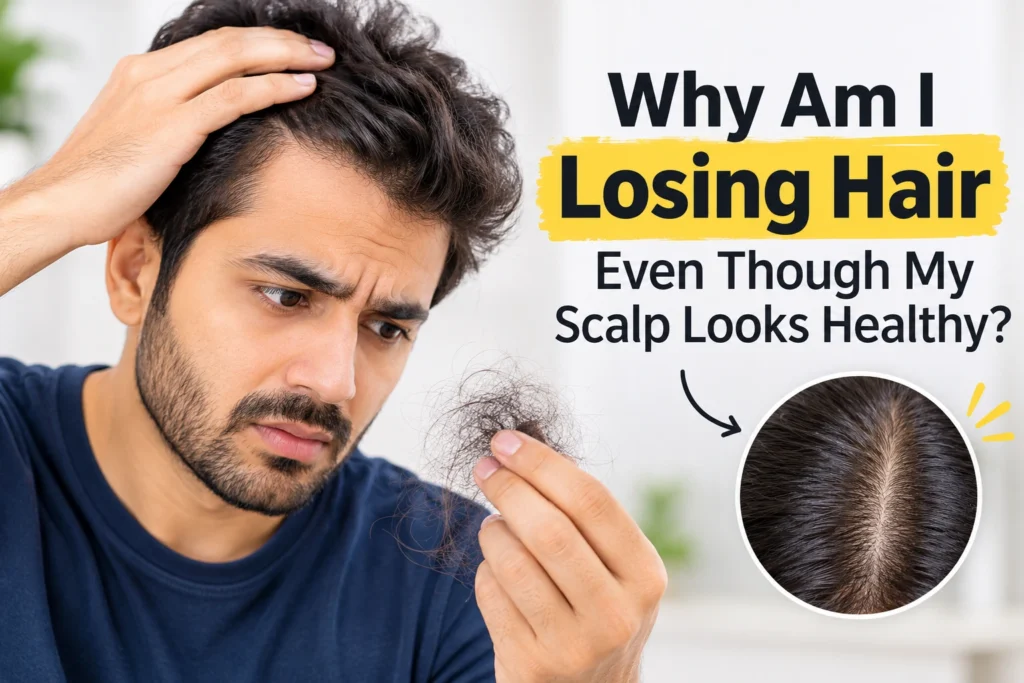
You look closely at your scalp and see no dandruff, no redness and no itching. Yet your brush is full, your drain is clogged and your parting looks wider. It is confusing, and a little scary. Here is the encouraging truth: a healthy-looking scalp does not always mean healthy hair follicles, and many causes of hair loss are treatable once they are identified.
At Renaissance Clinic India, this is one of the most common concerns we hear. This guide explains the hidden reasons behind hair loss with a healthy scalp, and what you can do about each one.
Quick Answer: Why Does Hair Fall Even When the Scalp Looks Fine?
Hair can fall even when your scalp looks perfectly healthy because the cause is usually under the skin or inside the body, not on the surface. The most common reasons are genetic pattern hair loss, stress-related shedding (telogen effluvium), nutritional gaps such as low iron or protein, thyroid or hormonal changes, and certain medicines. A proper diagnosis finds the cause, and treating the cause is often the key to recovery.
First, What Is Normal?
Before worrying, know that some shedding is part of life. Most healthy people lose up to around 100 strands a day as part of the natural growth cycle, with new hairs growing in to replace them, according to Cleveland Clinic’s overview of hair loss. It becomes a concern when you notice:
- Much more hair than usual on your pillow, comb or in the shower
- A widening parting or a receding hairline
- Thinner ponytail volume
- Visible scalp at the crown or temples
- Shedding that continues for more than a few weeks
7 Hidden Reasons for Hair Loss With a Healthy Scalp
1. Genetic pattern hair loss (the most common reason)
Pattern hair loss, called androgenetic alopecia, is hereditary and is the most common cause of hair thinning in both men and women. The scalp looks healthy because the problem is happening inside the follicle: sensitive follicles slowly shrink and produce finer, shorter hairs. In men it often shows as a receding hairline or crown thinning, and in women as a widening parting or overall thinning. A published evidence-based review of androgenetic alopecia treatment describes it as a chronic, progressive condition with proven medical options, which is why early diagnosis matters.
2. Stress and illness (telogen effluvium)
After a major physical or emotional stress, such as surgery, high fever, childbirth, a serious illness or a period of intense pressure, many hairs can enter the resting phase together. A few weeks to a few months later, they shed all at once. It can feel dramatic, but it is often temporary, and once the trigger settles, regrowth commonly follows over the next several months.
3. Nutritional gaps
Low iron, low protein, low vitamin D and zinc deficiency are linked with hair shedding, and crash diets or very low calorie intake can trigger it too. This is especially common among vegetarians, young women and people on restrictive diets. A simple blood test can check these levels.
4. Thyroid and hormonal changes
Both an underactive and an overactive thyroid can affect hair. Hormonal shifts, including those around pregnancy, postpartum and conditions that affect androgen levels, can also change your hair cycle. These are checked with blood tests and clinical evaluation.
5. Medicines and treatments
Some medicines can cause temporary hair shedding as a side effect. Never stop a prescribed medicine on your own. Instead, speak with your doctor, who can advise if an alternative is possible.
6. Hair care habits and physical damage
Tight hairstyles, frequent heat styling, chemical treatments and aggressive brushing can weaken hair and cause breakage or traction-related loss. Because the scalp itself may look normal, people often miss this link.
7. Alopecia areata and other conditions
An autoimmune condition called alopecia areata usually shows up as smooth, round patches of hair loss, sometimes on an otherwise normal-looking scalp. If you notice patches, see a doctor early.
Why a Proper Diagnosis Changes Everything
Two people can both say “my hair is falling” and need completely different treatment. That is why a good evaluation usually includes:
- A detailed history of your health, diet, stress, medicines and family history
- A close scalp and hair examination, sometimes with magnified imaging of follicles
- Blood tests where needed, such as thyroid function, iron levels and vitamin D
- A hair pull test to understand how actively hair is shedding
As Cleveland Clinic notes, when hair loss comes from a medical, hormonal or dietary cause, treating that underlying cause is often what helps the hair recover.
The Hopeful Part: What Can Help
The right treatment depends on the cause. Your doctor may recommend one or a combination of the following.
Treat the root cause first
Correcting low iron, thyroid imbalance or a nutritional gap, and managing stress, are often the first and most important steps.
Doctor-guided hair treatment plans
For many patients, a personalised medical plan can help reduce shedding and support regrowth. Explore our hair treatment in Ghaziabad and Indirapuram to see how plans are tailored to each person.
PRP therapy
Platelet-rich plasma uses components from your own blood, concentrated and placed into the scalp, with the aim of supporting weakened follicles and encouraging healthier growth. Learn more about PRP treatment in Ghaziabad.
GFC therapy
Growth factor concentrate is a related, plasma-based approach that focuses on growth factors for follicle support, and may be suggested where thinning is early to moderate. See our page on GFC treatment in Ghaziabad.
Hair transplant when loss is permanent
If pattern hair loss has progressed and follicles have stopped producing hair in certain areas, a transplant can restore density by relocating healthy, resistant hair. It is not the first step for everyone, and it works best as part of a long-term plan. You can read about our hair transplant in Ghaziabad or, if Noida is closer, our hair transplant in Noida page.
Results vary from person to person, and no treatment works for every cause. That is exactly why diagnosis comes first.
Everyday Habits That Support Healthy Hair
- Eat balanced meals with enough protein, iron-rich foods and fruits and vegetables
- Avoid crash diets and extreme calorie restriction
- Be gentle: avoid tight hairstyles, very hot styling tools and harsh chemical treatments
- Manage stress through sleep, movement and relaxation
- Do not start random supplements or strong medicated products without medical advice
- Do not delay: the earlier the cause is found, the more options you have
When Should You See a Doctor?
Book a consultation if:
- Hair fall has lasted more than 6 to 8 weeks
- You see a clear thinning pattern, a receding hairline or a widening parting
- You notice bald patches
- You have other symptoms such as fatigue, weight changes, irregular periods or feeling cold
- You have tried home remedies for months without improvement
The Bottom Line
Losing hair with a healthy-looking scalp is common, and it is rarely a sign that nothing can be done. The cause might be genetic, hormonal, nutritional or stress-related, and each has its own path forward. The most hopeful step is also the simplest: find out why it is happening.
Ready for clear answers about your hair? Visit Renaissance Clinic India and book a consultation. We will help you understand the cause and plan the right treatment for you.
Frequently Asked Questions
Why am I losing hair even though my scalp looks healthy? The cause is often inside the follicle or the body rather than on the scalp surface. Common reasons include genetic pattern hair loss, stress-related shedding, low iron or protein, thyroid or hormonal changes, and certain medicines.
How much hair loss per day is normal? Losing up to around 100 hairs a day is generally considered normal. If you are losing much more than usual, or notice thinning or a wider parting, it is worth getting checked.
Can stress cause hair loss, and will it grow back? Yes. Stress or illness can push many hairs into the shedding phase, usually a few weeks to months later. When the trigger settles, hair often regrows gradually over several months, though this depends on the individual.
Which tests are done for unexplained hair loss? Doctors may check thyroid function, iron levels and vitamin D through blood tests, along with a scalp examination and review of your medical and family history.
Can PRP or GFC treatment help hair loss? PRP and GFC are used to support follicle health and may help some people with early to moderate thinning. Suitability and results depend on the cause and the individual, so a consultation is needed first.
When is a hair transplant the right choice? A hair transplant is usually considered when pattern hair loss has caused permanent thinning or baldness in certain areas and the cause has been properly diagnosed. Your doctor will advise on timing and planning.