
The Complete 2026 Guide by Renaissance Clinic India, Delhi NCR
Updated June 2026 | Medically Reviewed | Based on 5,000+ Patient Cases
|
50% Of men and women experience noticeable hair loss by age 50 |
15 Distinct causes covered in this comprehensive guide |
90% Of cases are treatable when diagnosed and addressed early |
Free Trichoscopy consultation at Renaissance Clinic India |
Sources: AAD | NCBI | NIH | Mayo Clinic | renaissanceclinicindia.com
|
Table of Contents 1. Why Is My Hair Falling Out? Understanding Normal vs Abnormal Shedding 2. 15 Common Causes of Hair Loss — Complete Breakdown 3. How to Identify Which Cause Applies to You 4. When to See a Specialist 5. Best Treatment Options for Each Cause 6. Advanced Clinical Treatments at Renaissance Clinic India 7. Frequently Asked Questions 8. References, Backlinks & Internal Linking Map |
1. Why Is My Hair Falling Out? Understanding Normal vs Abnormal Shedding
Why is my hair falling out? This is one of the most frequently searched and most anxiety-inducing questions we encounter at Renaissance Clinic India — and for good reason. Hair carries enormous emotional and social significance, and noticing more strands than usual on your pillow, in the shower, or on your hairbrush can feel alarming, even when the cause turns out to be entirely manageable.
Before diving into specific causes, it helps to understand what is biologically normal. Every hair follicle on your scalp cycles independently through phases of active growth, transition, and rest, before the hair sheds and a new one begins growing in its place. Losing 50 to 100 hairs per day is considered entirely normal as part of this natural cycle — it is when shedding significantly exceeds this baseline, or when it is concentrated in specific patterns rather than spread diffusely, that it becomes worth investigating.
At our Delhi NCR clinic, we see patients across every age group, gender, and background asking this exact question — and the honest answer is that hair loss is rarely caused by just one factor. Genetics, hormones, nutrition, stress, medical conditions, medications, and even everyday hair care habits can all play a role, sometimes in combination. Identifying the actual cause — or causes — in your specific case is the single most important step toward effective treatment.
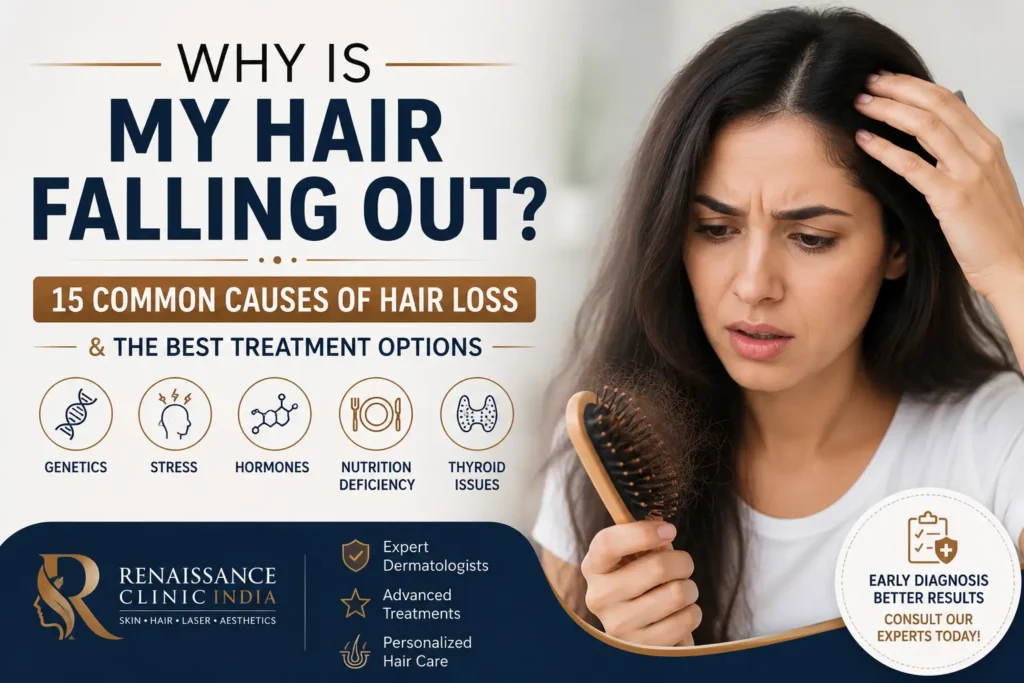
This comprehensive guide walks through the 15 most common causes of hair loss we encounter clinically, how to recognise which one might apply to you, and the evidence-based treatment options available for each.
|
Quick Facts Before We Begin • Losing 50-100 hairs per day is normal — concern arises when shedding significantly exceeds this or follows a clear pattern • Genetics (androgenetic alopecia) is the single most common cause of hair loss in both men and women • Many causes of hair loss are temporary and fully reversible once the underlying trigger is addressed • A proper diagnosis — not guesswork — is the foundation of effective treatment • Early intervention consistently produces better outcomes than waiting, particularly for progressive causes |
2. 15 Common Causes of Hair Loss — Complete Breakdown
Here is a detailed look at the fifteen causes our physicians most frequently identify during patient consultations, grouped logically for clarity.
1. Androgenetic Alopecia (Genetic Pattern Hair Loss)
The most common cause of hair loss worldwide, affecting an estimated 50% of men and up to 40% of women by age 50. Driven by genetic sensitivity to dihydrotestosterone (DHT), which gradually shrinks hair follicles over successive growth cycles. In men, this typically presents as a receding hairline and crown thinning; in women, as diffuse thinning at the crown with a widening parting.
2. Telogen Effluvium (Stress-Related Shedding)
A temporary condition where a significant proportion of hair follicles are pushed into the resting phase simultaneously, usually triggered by major physical or emotional stress — illness, surgery, childbirth, significant weight loss, or psychological stress. Shedding typically becomes noticeable 2-3 months after the triggering event and is usually diffuse across the whole scalp.
3. Thyroid Dysfunction
Both an underactive thyroid (hypothyroidism) and an overactive thyroid (hyperthyroidism) disrupt the hormonal signalling that regulates the hair growth cycle, leading to diffuse shedding. Often accompanied by other symptoms including fatigue, weight changes, and temperature sensitivity. A simple blood test (TSH, T3, T4) confirms or rules out this cause.
4. Iron Deficiency and Anaemia
Iron is essential for the cellular activity that drives hair follicle growth. Low serum ferritin — even without full-blown anaemia — has been repeatedly linked to increased hair shedding, particularly in women with heavy menstrual cycles or restrictive diets. This is one of the most under-diagnosed and most easily correctable causes we see clinically.
5. PCOS (Polycystic Ovary Syndrome)
Affecting up to 10% of women of reproductive age, PCOS involves elevated androgen levels and insulin resistance, both of which can drive pattern hair thinning similar to androgenetic alopecia. Often accompanied by irregular periods, acne, and excess facial or body hair — addressing the syndrome holistically improves outcomes beyond hair alone.
6. Postpartum Hormonal Shift
After childbirth, the sharp drop in estrogen following the high levels maintained throughout pregnancy causes a large proportion of hair follicles to enter the shedding phase simultaneously. This typically peaks 2-4 months postpartum and resolves naturally within 6-12 months for most women without intervention.
7. Menopause
As estrogen and progesterone decline during perimenopause and menopause, androgens become relatively more dominant, often accelerating pattern hair thinning that may have been present in a milder form for years beforehand. Read our detailed guide on hair loss after menopause for an in-depth look at this specific cause.
8. Alopecia Areata (Autoimmune Hair Loss)
An autoimmune condition where the immune system mistakenly attacks hair follicles, causing sudden, well-defined patches of hair loss — distinct from the diffuse or patterned thinning seen in most other causes. Requires dermatological diagnosis and a different treatment approach, often involving corticosteroid therapy.
9. Scalp Infections (Fungal and Bacterial)
Conditions such as tinea capitis (fungal scalp infection) or folliculitis (bacterial infection of hair follicles) cause inflammation that disrupts healthy hair growth and can lead to localised or generalised shedding. Often accompanied by itching, redness, flaking, or visible lesions on the scalp — these become notably more common during humid seasons.
10. Nutritional Deficiencies (Protein, Zinc, Vitamin D, Biotin)
Beyond iron, deficiencies in protein, zinc, vitamin D, and B-vitamins including biotin are well-documented contributors to hair thinning. Crash diets, restrictive eating patterns, and certain medical conditions affecting nutrient absorption all increase this risk. Blood-test-guided correction is far more effective than generic supplementation.
11. Certain Medications
A range of medications list hair loss as a potential side effect, including some blood thinners, antidepressants, beta-blockers, retinoids, and chemotherapy drugs. If hair loss began shortly after starting a new medication, this connection is worth discussing with both your prescribing doctor and a hair specialist — never stop a prescribed medication without medical guidance.
12. Traction Alopecia (Hairstyle-Related)
Caused by chronic, repeated tension on hair follicles from tight hairstyles — ponytails, braids, buns, or hair extensions worn consistently over months or years. Most commonly affects the hairline and temples. Caught early, traction alopecia is reversible by changing hairstyle habits; prolonged tension can cause permanent follicle damage.
13. Chronic Stress and Cortisol Elevation
Beyond triggering acute telogen effluvium, sustained chronic stress keeps cortisol levels elevated over long periods, which can continuously disrupt the hair growth cycle rather than causing a single shedding event. This often compounds with other causes on this list, making stress management a meaningful component of any treatment plan.
14. Excessive Heat Styling and Chemical Treatments
Frequent use of heat styling tools, chemical relaxers, perms, and harsh hair colouring treatments can weaken the hair shaft and damage follicles over time, leading to breakage that is sometimes mistaken for true hair loss. While this typically causes breakage rather than follicle-level shedding, severe or prolonged damage can affect the follicle itself.
15. Underlying Chronic Illness
Conditions including diabetes, lupus, and other chronic systemic illnesses can affect hair growth as part of their broader impact on the body. Hair loss accompanying unexplained fatigue, joint pain, skin changes, or other systemic symptoms warrants a comprehensive medical evaluation, not just a hair-focused assessment.
3. How to Identify Which Cause Applies to You
With fifteen possible causes, self-diagnosis is genuinely difficult — and often inaccurate. However, certain patterns offer useful clues before you seek a professional opinion:
|
Pattern of Hair Loss |
Most Likely Causes to Consider |
|
Receding hairline + crown thinning (gradual, over years) |
Androgenetic alopecia |
|
Widening parting, crown thinning, hairline preserved (women) |
Androgenetic alopecia, PCOS, menopause |
|
Sudden, diffuse shedding, whole scalp, no clear pattern |
Telogen effluvium, thyroid, nutritional deficiency, medication |
|
Well-defined round or oval bald patches |
Alopecia areata |
|
Hairline/temple thinning with itching or scalp tenderness |
Traction alopecia, scalp infection |
|
Shedding 2-4 months after childbirth |
Postpartum telogen effluvium |
|
Shedding alongside fatigue, weight change |
Thyroid dysfunction |
|
Shedding with irregular periods, acne, excess facial hair |
PCOS |
|
Shedding began after starting a new medication |
Medication-induced hair loss |
|
Breakage rather than shedding (short hairs, no root bulb) |
Heat/chemical damage, traction |
4. When to See a Specialist
While some causes of hair loss resolve on their own, waiting too long before seeking assessment is one of the most common mistakes we see — particularly with androgenetic alopecia, where follicles that have fully miniaturised cannot be reactivated. Seek professional assessment if:
- Daily shedding consistently exceeds 100-150 hairs over several weeks
- You notice a widening parting, reduced ponytail thickness, or visible scalp
- Hair loss follows a well-defined patchy pattern rather than diffuse thinning
- Shedding is accompanied by scalp itching, redness, pain, or visible lesions
- Shedding has not improved 6-12 months after a known trigger (illness, childbirth, stress)
- You have a strong family history of hair loss and want to begin preventive treatment early
|
What a Professional Assessment Involves at Renaissance Clinic India Our consultation begins with trichoscopy — a magnified, non-invasive scalp examination that reveals follicle density, miniaturisation patterns, and any signs of scalp inflammation or infection. Based on findings, we may recommend targeted blood tests: ferritin/iron, thyroid panel, vitamin D, DHT/testosterone, and other markers relevant to your specific presentation. This combined clinical and laboratory picture allows us to identify the actual cause — or combination of causes — driving your hair loss, rather than guessing or treating symptoms generically. |
5. Best Treatment Options for Each Cause
Treatment is most effective when matched precisely to the underlying cause. Here is an evidence-based overview:
|
Cause Category |
First-Line Treatment Approach |
|
Androgenetic alopecia |
Topical minoxidil, anti-androgen therapy (where appropriate), PRP, hair transplant for stable cases |
|
Telogen effluvium |
Identify and address trigger; nutritional support; usually self-resolving within 6-12 months |
|
Thyroid dysfunction |
Medical management of thyroid condition; hair regrowth often follows as a secondary benefit |
|
Iron/nutritional deficiency |
Blood-test-guided supplementation and dietary correction |
|
PCOS |
Endocrinology co-management; anti-androgen therapy; insulin-sensitising approaches |
|
Postpartum shedding |
Nutritional support; reassurance; PRP if prolonged beyond 12 months |
|
Menopause-related thinning |
Topical treatment, PRP, hormonal discussion with physician |
|
Alopecia areata |
Dermatologist-directed corticosteroid or immunotherapy treatment |
|
Scalp infections |
Targeted antifungal/antibacterial treatment |
|
Medication-induced |
Discuss alternatives with prescribing physician; do not self-discontinue |
|
Traction alopecia |
Change hairstyle habits immediately; PRP if follicle damage has occurred |
|
Chronic stress |
Stress management; nutritional support; clinical treatment for compounding factors |
|
Heat/chemical damage |
Reduce styling frequency; protein treatments; trim damaged ends |
|
Underlying chronic illness |
Comprehensive medical management of the systemic condition |
6. Advanced Clinical Treatments at Renaissance Clinic India
Beyond addressing the root cause, several clinical treatments accelerate and enhance hair recovery across multiple causes of hair loss:
|
Treatment |
Mechanism |
Best Suited For |
|
PRP (Platelet-Rich Plasma) Therapy |
Concentrated growth factors from your own blood stimulate follicle activity and extend the growth phase |
Androgenetic alopecia, postpartum shedding, early hormonal thinning |
|
GFC (Growth Factor Concentrate) |
Refined, higher-concentration growth factor preparation for enhanced follicle stimulation |
Moderate hair loss across multiple causes |
|
Microneedling |
Stimulates collagen production and enhances absorption of topical treatments |
Combined with PRP or minoxidil for synergistic effect |
|
Medicated Scalp Treatments |
Targeted antifungal, antibacterial, or anti-inflammatory protocols |
Scalp infections, seborrheic dermatitis |
|
Hair Transplant (FUE/DHI) |
Permanent relocation of DHT-resistant follicles to areas of established, stable hair loss |
Advanced, stable androgenetic alopecia |
|
Why a Personalised Plan Matters Because hair loss frequently involves more than one contributing cause, Renaissance Clinic India builds individualised treatment plans rather than offering a single generic protocol to every patient. Our physicians combine trichoscopy findings, blood work where relevant, and a detailed history to design a plan that addresses your specific combination of causes. Book your consultation at renaissanceclinicindia.com to begin with an accurate diagnosis rather than guesswork. |
7. Frequently Asked Questions
Q1. Is it normal to lose hair every day?
Yes. Losing 50-100 hairs per day is a normal part of the natural hair growth cycle, in which individual follicles cycle independently through growth and resting phases. Concern is warranted when shedding significantly and persistently exceeds this range, or follows a clear thinning pattern rather than even, diffuse loss.
Q2. Can hair loss be reversed?
It depends entirely on the cause. Telogen effluvium, nutritional deficiency-related shedding, thyroid-related loss, and postpartum shedding are often substantially or fully reversible once the underlying trigger is addressed. Androgenetic alopecia is progressive without treatment but responds well to early intervention; fully miniaturised follicles, however, cannot be reactivated and may require hair transplantation for restoration.
Q3. How long should I wait before seeing a specialist?
If shedding is clearly linked to a known, temporary trigger (illness, stress, childbirth), waiting 3-6 months for natural improvement is reasonable. If there is no clear trigger, if shedding is patterned rather than diffuse, or if it persists beyond 6 months, earlier assessment gives the best chance of identifying a treatable cause before further progression.
Q4. Can hair loss in women have different causes than in men?
While androgenetic alopecia affects both sexes, women experience several additional hormonal causes far more frequently than men — including PCOS, postpartum shedding, and menopause-related thinning. Women’s hair loss patterns also typically differ visually, presenting as diffuse crown thinning with parting widening rather than the receding hairline pattern more typical in men.
Q5. Do hair supplements actually work?
Generic hair supplements taken without a confirmed deficiency are largely ineffective, because they cannot correct a problem that does not exist in your specific case. Supplementation is genuinely effective when guided by blood test results confirming an actual deficiency — for example, correcting confirmed low ferritin or vitamin D produces measurable improvement, whereas blanket supplementation in someone without a deficiency typically does not.
Q6. How accurate is a trichoscopy assessment?
Trichoscopy is a well-established, internationally used diagnostic tool that provides magnified visualisation of the scalp and hair follicles, revealing miniaturisation patterns, density, and signs of inflammation or infection that are not visible to the naked eye. Combined with a thorough history and, where indicated, blood testing, it forms a highly reliable basis for accurate diagnosis and treatment planning.
References
The information in this article is based on current dermatology research and guidance from internationally recognized medical organizations.
- American Academy of Dermatology (AAD) – Comprehensive information on the causes, diagnosis, and treatment of hair loss.
https://www.aad.org/public/diseases/hair-loss
Conclusion: The Right Answer Starts With the Right Diagnosis
Why is my hair falling out? As this guide has shown, there is rarely a single, simple answer — but there is almost always a findable one. From genetics and hormones to nutrition, stress, scalp health, and underlying medical conditions, the fifteen causes covered here represent the vast majority of cases we see at Renaissance Clinic India.
The single most valuable step you can take is moving from uncertainty to an accurate diagnosis. Guessing — or trying generic remedies without understanding your specific cause — wastes time that matters, particularly for progressive conditions like androgenetic alopecia where early intervention makes a measurable difference to long-term outcomes.
At Renaissance Clinic India, our physicians combine clinical trichoscopy, targeted investigations, and years of experience treating thousands of patients to give you clarity, not guesswork — and a treatment plan built specifically around your hair, your causes, and your goals.
|
Find Out Exactly Why Your Hair Is Falling Out — Book Consultation Trichoscopy assessment + personalised diagnosis + evidence-based treatment plan PRP | GFC | Medicated Scalp Care | Hair Transplant | Nutritional Plans
Renaissance Clinic India | India’s Trusted Hair Restoration Centre www.renaissanceclinicindia.com Serving: Delhi | Noida | Gurgaon | Ghaziabad | Faridabad | All NCR |
Renaissance Clinic India | renaissanceclinicindia.com | Trusted Hair Restoration Across Delhi NCR
Copyright 2026 Renaissance Clinic India. All rights reserved. This content is informational only. Results vary by individual. Consult a qualified physician for personalised advice.